
Check the exact plan before relying on familiar names
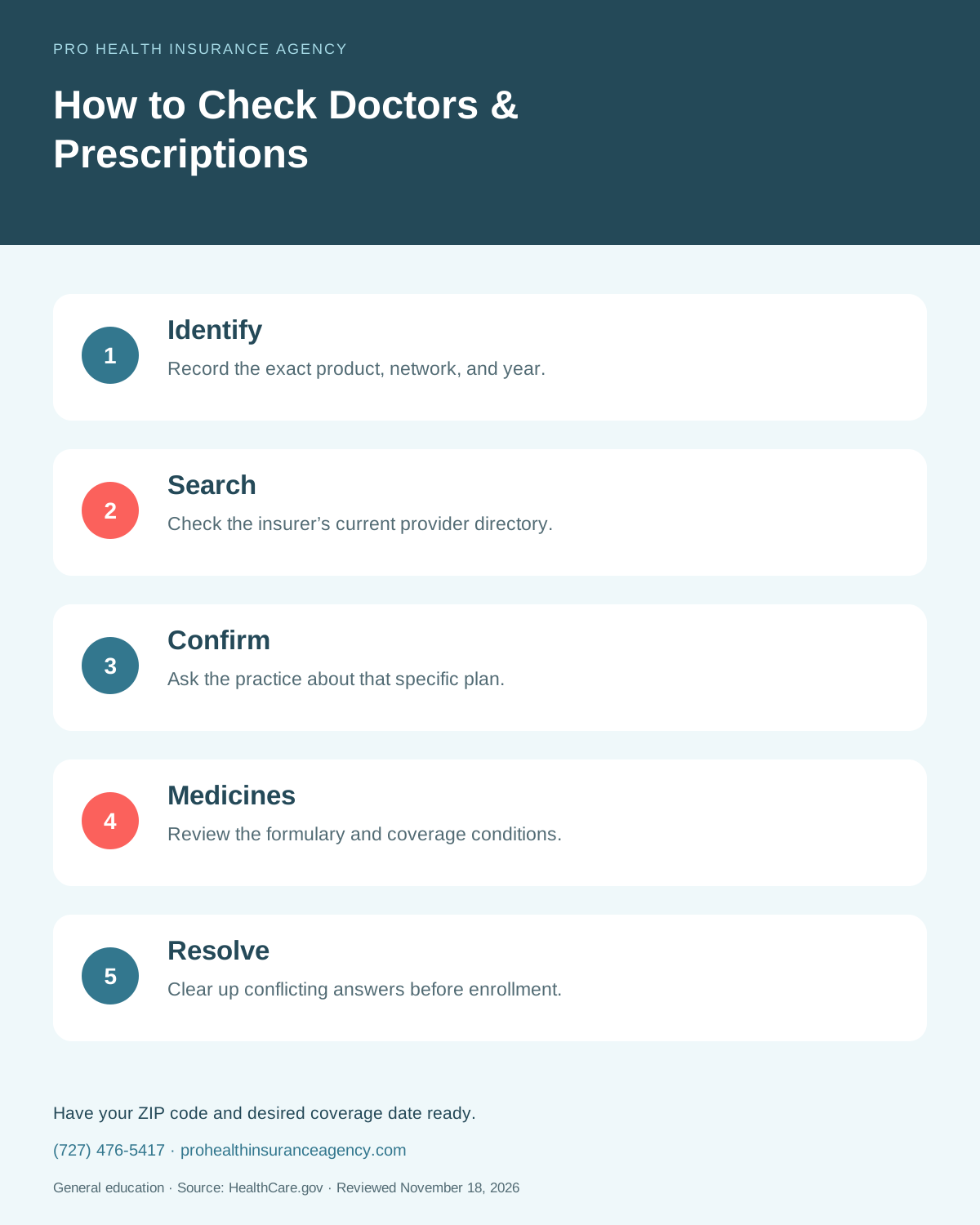
To check doctors and prescriptions before choosing health insurance, verify the exact product, network, coverage year, provider location, and formulary. Confirm provider participation with both the insurer and practice, and resolve conflicting answers before enrolling. An insurer's name alone is too broad to establish that your care will be covered in the way you expect. Pro Health Insurance Agency's St. Petersburg contact, (727) 476-5417, is a place to begin organizing the questions you want answered about your next health insurance comparison.
Build a private care checklist
List the providers you use, including primary care, specialists, hospitals, laboratories, and pharmacies that matter to you. Record each practice location because a clinician may work at more than one office or facility. Keep prescription names, strengths, and usual refill arrangements in the same private checklist. You do not need to include detailed health information in an initial website inquiry. The goal is to identify the checks that could affect your choice. For a household, make a separate list for each person so one member's provider preference is not lost inside a general family question.
Identify the product and coverage year
Ask for the plan's complete name, network name, and relevant identifier before searching a directory. Insurers can offer several networks, and a directory for a different product may create a false impression of access. Verify that the information applies to the year in which you would be covered. Save the exact plan details beside your notes rather than relying on a logo in a screenshot. If an agent or insurer sends a directory link, confirm the selected network and product before interpreting the results. This small step prevents many later misunderstandings.
Use the insurer's current provider directory
Search for the doctor or practice at the location you intend to visit. Check the specialty and the details shown for the exact network. If the directory offers several similar names, do not assume the first result is correct. Ask the insurer to clarify any uncertainty. Record the date you checked and the information you used. A directory entry is a useful starting point, but it should not end the review when maintaining a particular provider is central to your decision. Current confirmation is especially helpful when planning a change from an existing policy.
Ask the practice a specific question
Instead of asking whether the office accepts an insurance company, identify the full product and network. Ask whether the provider participates at your intended location for that plan. Also ask about accepting new patients when relevant; network participation and appointment availability answer different questions. The practice may need its billing or insurance staff to review the details. Keep the response tied to the exact plan rather than a general brand statement. If the practice and insurer give different answers, ask both to help resolve the conflict before you commit to a replacement policy.
Check facilities and related services separately
A doctor and the facility where care occurs may involve different network questions. Laboratory work, imaging, outpatient procedures, or other separately billed services can also need review. Ask how the plan treats the care setting you expect to use. If a provider recommends a particular facility, verify that facility rather than assuming the doctor's participation answers the entire question. For planned care, ask what authorization or referral steps apply. These checks do not guarantee a future claim outcome, but they give you a better basis for understanding the policy's written requirements before making a choice.
Read the formulary for each medication
Use the exact medicine name and strength when checking the plan's drug list. Ask which tier applies and how its cost sharing works at your pharmacy. Confirm whether a prescription deductible affects the expense. Then check any conditions such as prior authorization, quantity limits, or step therapy. Finding a medicine's name in a list does not automatically answer those questions. If you use a brand version, clarify whether the listing refers to that version or a different covered alternative. The insurer or pharmacy can explain how the specific prescription would be handled under the plan.
Include pharmacy access in the review
Check whether your usual pharmacy participates and whether the plan distinguishes preferred locations or particular refill arrangements. Ask about the rules for maintenance medicines if they are relevant to your situation. Keep these questions separate from the medication's formulary status: a medicine and a dispensing location are different parts of the comparison. If you spend time away from home, ask how refills and routine care work in the places you visit. Do not infer broad access from a single participating pharmacy near your St. Petersburg residence.
Understand network types without overgeneralizing
HealthCare.gov explains several common network structures, including HMOs, PPOs, EPOs, and POS plans. The labels help describe broad patterns, but the actual policy governs provider access, referrals, and out-of-network benefits. Ask how the specific plan works rather than assuming every product with the same label behaves identically. Consider your routine care, specialist preferences, and travel needs together. If out-of-network access matters, request a clear explanation of coverage conditions and costs. Do not treat an emergency exception as an answer about ordinary appointments outside the network.
Refresh your checks when plans change
Repeat important checks when reviewing a renewal or considering a different product. A provider confirmation from an earlier year may describe a different network arrangement, and a prescription's treatment may also change. Keep your old notes for reference, but date the new results separately. If keeping a particular doctor is essential, make that priority clear at the beginning of the comparison. The most useful record is specific enough for another person to understand what was verified: exact plan, coverage year, location, source, and any condition attached to the answer. A familiar logo cannot replace those details.
Record uncertainties before deciding
Create a checklist with the provider or medicine, the exact plan checked, the source of the answer, and anything unresolved. Confirm the items that would change your decision first. Keep copies of relevant policy materials and note when a directory or formulary was consulted. For a broader comparison, read our plan selection guide and cost guide. If you are reviewing coverage for several people, see family health insurance. Use the agency contact to begin your discussion, and use insurer confirmation and written plan terms to verify the benefits you would actually rely on.